ℹ️ Informational only. This site aggregates public news and does not provide legal or immigration advice. Always verify with USCIS.gov or travel.state.gov. Full disclaimer →

StatusWire
← Back to feed
General U.S. NewsAug 27, 2026·3 min read·🔥 High relevance

GOP heads to Supreme Court after losing case over TV election ad prices

A

Ars Technica

arstechnica.com
Aug 27, 2026
GOP heads to Supreme Court after losing case over TV election ad prices

Summary

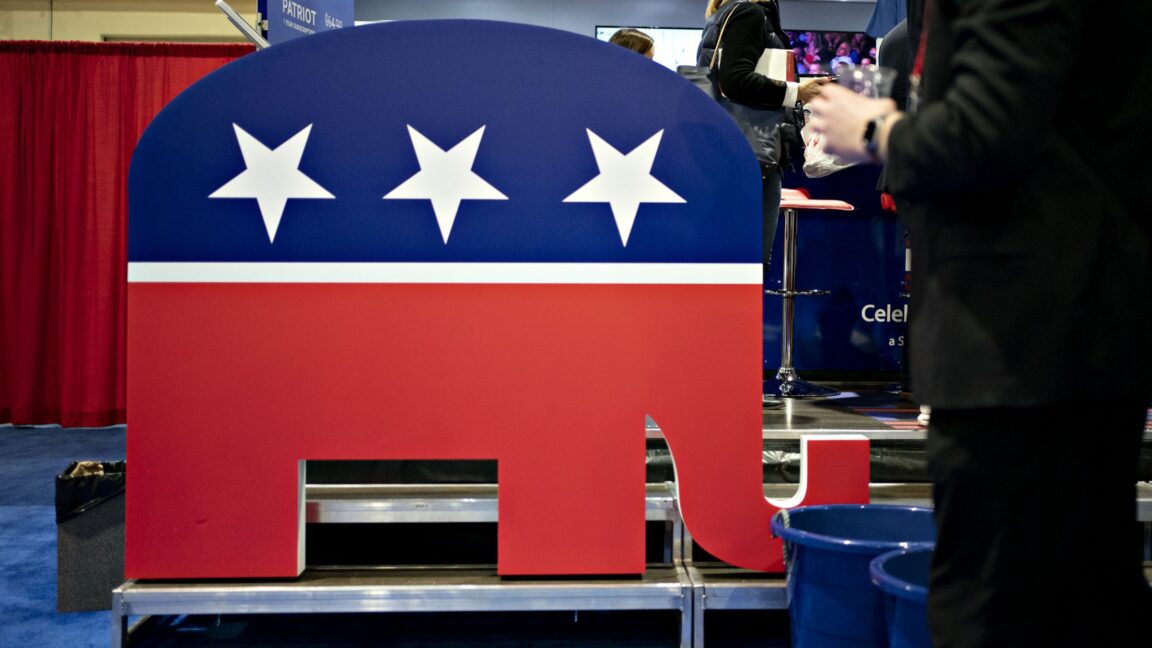
Republican campaign committees want the Supreme Court to mandate lower prices for election commercials on broadcast TV stations. The committees submitted an emergency motion for a stay and asked the 4th Circuit to rule on that motion immediately so they can file a petition to the Supreme Court. “Intervenors respectfully request that the Court rule on this stay motion as soon as possible—whether by expediting or waiving response briefs—to permit Intervenors to seek emergency relief at the Supreme Court,” Republican committees told the court. The court responded quickly, issuing an order today to deny the Republican committee’s motion and to immediately issue a mandate that can be appealed to the Supreme Court. The FCC repealed this ownership rule even though the 39 percent figure was specified by Congress in a 2004 law, paving the way for another court battle over the limits of FCC authority. From a legal perspective, all the cases are decided based on interpretations of what Congress meant when it put specific words and phrases into US law. A potential problem for Republicans is that the FCC position contradicts agency guidance from 1991 and a statement made to the Supreme Court last year by the Trump administration’s own solicitor general. In the recent Supreme Court case over spending limits, US Solicitor General John Sauer wrote in a filing that the “rules require broadcasters to charge low rates for candidate spending, but not for party spending—whether coordinated or independent.” But Republicans have reason for optimism given the conservative makeup of the Supreme Court and the 4th Circuit dissent from Judge J. The 4th Circuit judges decided they have jurisdiction because the FCC’s failure to act on a petition filed by Democratic candidates amounted to a “constructive denial.” Wilkinson disagreed on that count, too, saying the FCC guidance is not a final order because the FCC is still reviewing the candidates’ application. If the Supreme Court does act quickly in the GOP’s favor, it could stay the 4th Circuit court mandate on the grounds that the FCC order isn’t final and can’t be appealed yet. The Republican committees told the 4th Circuit to be wary of recent Supreme Court guidance. “Just two days ago, the Supreme Court reminded lower courts that they should not interfere with agency decision-making before it is final,” they wrote, referring to a ruling in Trump’s favor on vote-by-mail restrictions. “This Court should heed that instruction, and stay its order (or the mandate) pending a writ of certiorari to the Supreme Court.”

From the source

Republican campaign committees want the Supreme Court to mandate lower prices for election commercials on broadcast TV stations. If the court agrees, broadcasters would be forced to offer their lowest ad prices to political parties and joint fundraising committees. For a more thorough description of the legal issues in the dispute, see this article that Ars published yesterday. In short, US law requires broadcasters to offer individual candidates the “lowest unit charge,” or LUC, during the 60 days before an election. The law helps level the playing field somewhat by letting candidates make their cases to voters who watch broadcast TV without needing to raise exorbitant sums of money. The Trump administration, acting through the Federal Communications Commission, ordered broadcast TV stations to also give these discounts to political parties and joint fundraising committees, which face fewer limits on how much money they can raise and spend. Four Democratic candidates appealed, and a j

Read the full article

Published by Ars Technica on arstechnica.com

Open on arstechnica.com ↗
Advertisement

More in General U.S. News

Flavio Bolsonaro claims he is Brazil’s true leader after fleeing to U.S.
General U.S. News5d ago

Flavio Bolsonaro claims he is Brazil’s true leader after fleeing to U.S.

Subscribed with another email? Logout and Login with that one. Account subscription benefits alongside Premium Stories, Editorials, Opinions and more. Unlock these with Subscription Updated - October 29, 2026 12:00 pm IST - MIAMI Flávio Bolsonaro arrives at Miami Opa-Locka Executive Airport on October 28, 2026, in Opa-locka, Florida. | Photo Credit: AP Brazil's defeated right-wing presidential candidate Flavio Bolsonaro insisted on Wednesday (October 28, 2026) he is his country's rightful leader, after fleeing to the United States to start a self-imposed exile. Mr. Flavio Bolsonaro's defiance on arrival in Florida signalled continued upheaval for Brazil, where leftist President Luiz Inacio Lula da Silva won a dramatic runoff election on Sunday (October 25, 2026). "I am the elected president, and the criminals who stole Brazil's election are part of a criminal organization that has established a tyranny," Mr. Flavio Bolsonaro's Liberal Party in the Senate, told reporters in Brasilia that he was in "solidarity" with the former candidate, describing him as a "political exile." However, he distanced himself from Mr. Department of Homeland Security said in a statement that the Bolsonaro family members were inspected and cleared "with applicable immigration laws and procedures." The travel ban was issued by powerful Supreme Court Justice Alexandre de Moraes, who led the case against Mr. In July, the Supreme Court ordered a probe into the film's financing, and whether it involved corruption, money laundering or the illegal movement of currency.

Judge denies the Justice Department's bid to stop processing California ballots
General U.S. News5d ago

Judge denies the Justice Department's bid to stop processing California ballots

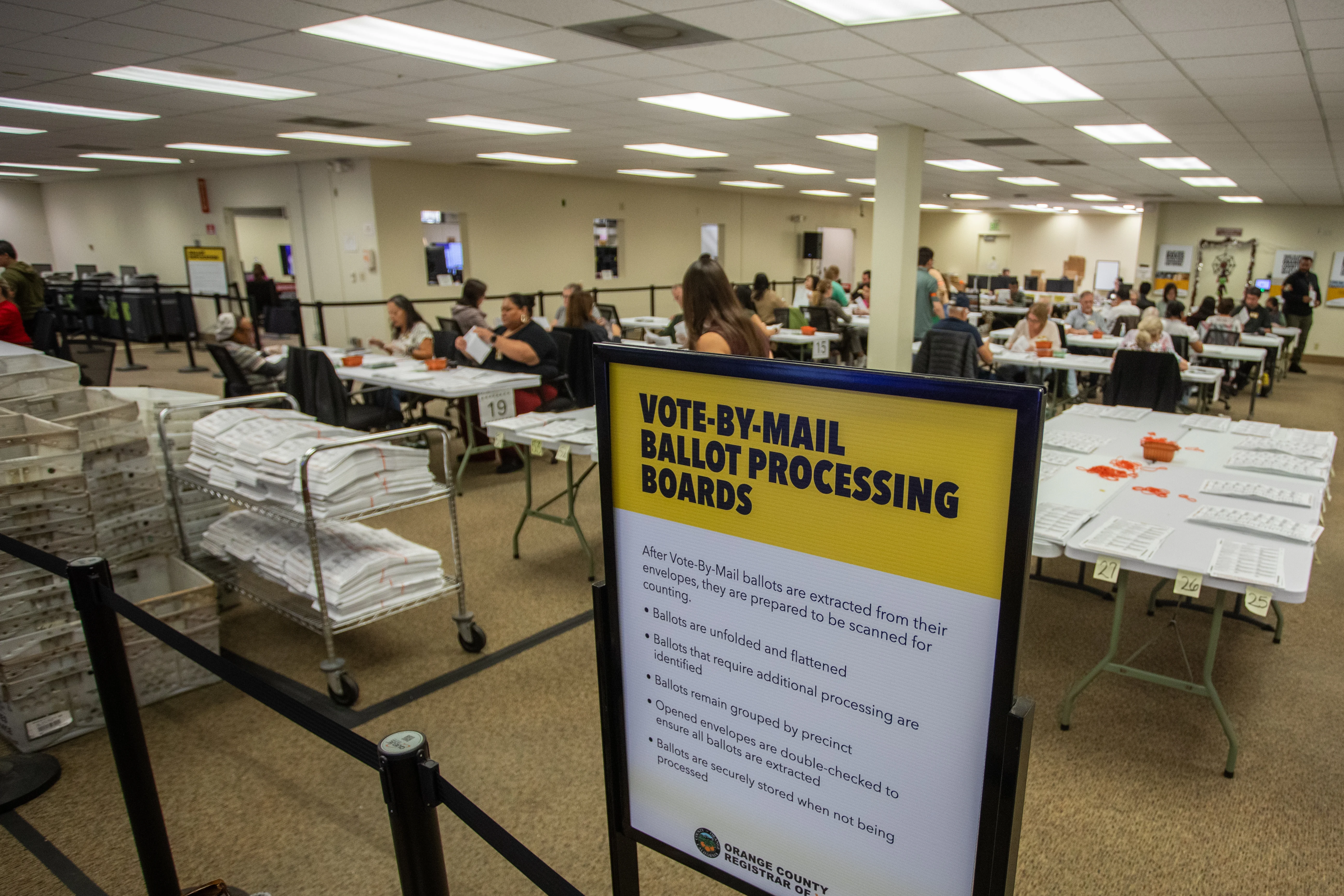
People extract ballots from their envelopes and prepare them to be scanned for counting in the Vote-By-Mail Processing Boards area at the Orange County Registrar of Voters Facility in Santa Ana, Calif., on Oct. 28. Apu Gomes/Getty Images hide caption A federal judge has denied an unprecedented, emergency request by the Department of Justice to segregate thousands of California ballots in the midterm elections. The Justice Department wants California election officials to stop processing ballots pertaining to 20,000 individuals that federal officials say are "likely" noncitizens. State and local officials in California have countered that the DOJ's list of "likely" noncitizens is unreliable, with a preliminary analysis by Los Angeles County showing that many on the list do not have active voter registrations. The officials also claim that setting aside ballots just days before Election Day, when voting and processing mailed ballots are already underway, would be unlawful and infeasible and would disenfranchise eligible voters. And last week, the DOJ filed an unusual lawsuit in Alaska that seeks to stop the state from certifying the results in its Senate race if the Republican incumbent loses due to votes for a longshot candidate with a similar name who is accused of being a spoiler candidate. "The Court must not be drawn into this chilling degradation of democratic values and constitutional principles." The Department of Justice quickly filed a notice that it is appealing Carter's denial. Citizenship and Immigration Services senior official Nicolas Bartell contested that in recent court filings, writing that his office's review of those individuals found none were U.S.-born. Bartell did acknowledge the review found four of those people "might have a claim to U.S. citizenship." He also provided the court additional details about the federal government's methodology in creating the list in recent court filings. But University of Delaware political scientist Kassra Oskooi, who has been tapped as an expert witness by voting rights groups who are intervening in the case, responded in his own declaration to the court that he believes USCIS (U.S. immigration agency)'s matching protocol "is likely to be unreliable." Carter wrote in his order the federal government's protocol "raises significant concerns" and that he could not conclude its process is credible.

Flávio Bolsonaro denies fleeing Brazil after landing in Miami
General U.S. News5d ago

Flávio Bolsonaro denies fleeing Brazil after landing in Miami

Watch: Has Flávio Bolsonaro fled Brazil to evade justice? Brazilian Senator Flávio Bolsonaro, who landed in Miami after losing the presidential election on Sunday, has said it was never his intention to "leave my homeland". "I did not flee Brazil; I left for the sake of Brazil," he said in his first statement since his departure. The US provided visas to him and his family after Brazil cancelled his passports as part of a criminal investigation. Speculation about Bolsonaro's whereabouts was first triggered by a report on an Argentine news site, which claimed that he had crossed the land border between Brazil and Argentina and then boarded a private plane en route to the US. Early on Tuesday, they checked border crossings but found no evidence that Bolsonaro had left the country, and Argentine officials said they had no reports of him crossing. But when he failed to surrender his passports in time to meet a 24-hour deadline on Tuesday, Brazilian authorities cancelled the documents and ordered police to make checks at border posts. Jair was still in the US when his supporters stormed Brazil's government buildings and Supreme Court on 8 January. Flávio's brother, Eduardo Bolsonaro, meanwhile, has been living in Texas after taking leave from Brazil's Congress. He is set to lose his parliamentary immunity on 31 January, when his eight-year Senate term ends.