ℹ️ Informational only. This site aggregates public news and does not provide legal or immigration advice. Always verify with USCIS.gov or travel.state.gov. Full disclaimer →

StatusWire
← Back to feed
Layoffs & Tech JobsSep 4, 2026·2 min read

Anthropic’s $2 trillion IPO puts powerful external trustees in spotlight

A

Ars Technica

arstechnica.com
3h ago
Anthropic’s $2 trillion IPO puts powerful external trustees in spotlight

Summary

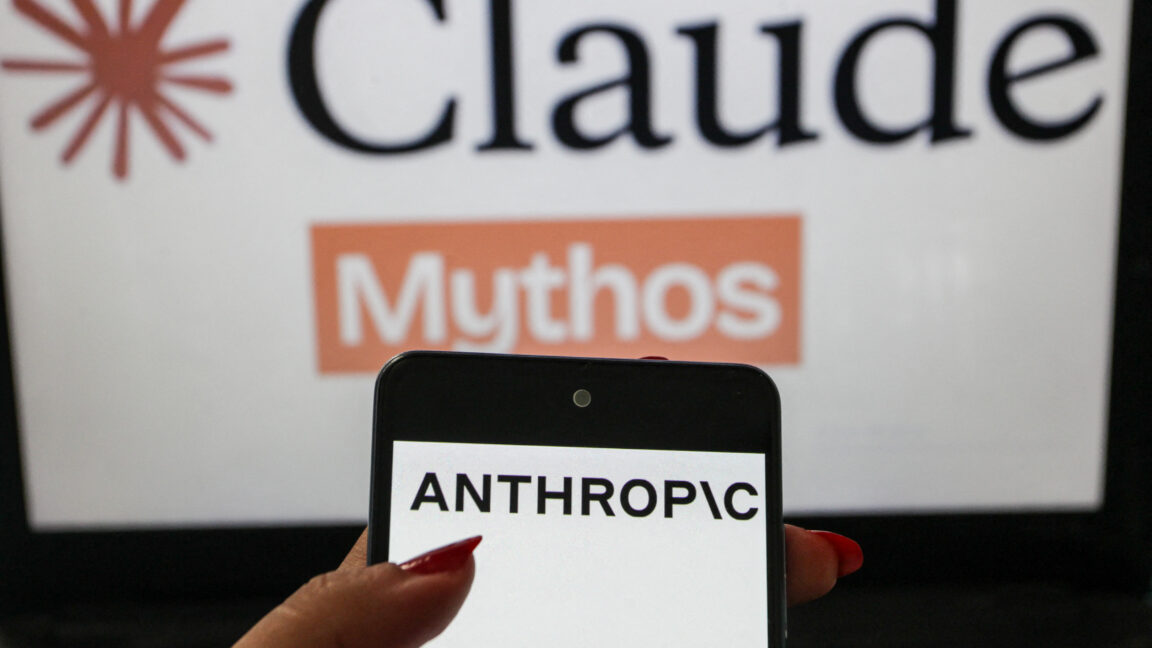
Anthropic’s prospective public-market investors must reckon with an external group of trustees that control the majority of the AI company’s board, as its planned blockbuster initial public offering forces close scrutiny of its experimental governance structure. The company’s Long-Term Benefit Trust (LTBT) is a small group of advisers created to safeguard the lab’s mission of developing AI for the long-term benefit of humanity, even as commercial pressures intensify. The trust holds no equity in Anthropic, but has significant influence, with the San Francisco-based company planning to preserve its role after a stock market debut that could value the Claude maker at as much as $2 trillion. The LTBT, which is the controlling governance mechanism of the Anthropic public benefit corporation, has the right to appoint or dismiss the majority of the company’s board. It has selected four of Anthropic’s seven directors, including Netflix’s co-founder Reed Hastings and Vas Narasimhan, chief executive of Novartis. Currently, the LTBT has three members out of a potential maximum of five, chaired by Neil Buddy Shah, chief executive of the Clinton Health Access Initiative, alongside former Federal Reserve chair Ben Bernanke and Richard Fontaine, CEO of the Center for a New American Security. Mariano-Florentino “Tino” Cuéllar, a former California Supreme Court justice, left the trust after a few months to work as Anthropic’s chief global affairs officer. Anthropic is attempting to establish a template for future AI governance through the trust, said multiple people close to its plans. They said the ambition for the LTBT is to provide an industry blueprint, similar to the GAAP accounting principles, which initially emerged as voluntary standards proposed by private companies. The incident led to most of the board members being replaced and a broader restructuring of the startup.

From the source

Anthropic’s prospective public-market investors must reckon with an external group of trustees that control the majority of the AI company’s board, as its planned blockbuster initial public offering forces close scrutiny of its experimental governance structure. The company’s Long-Term Benefit Trust (LTBT) is a small group of advisers created to safeguard the lab’s mission of developing AI for the long-term benefit of humanity, even as commercial pressures intensify. The trust holds no equity in Anthropic, but has significant influence, with the San Francisco-based company planning to preserve its role after a stock market debut that could value the Claude maker at as much as $2 trillion. Read full article Comments

Read the full article

Published by Ars Technica on arstechnica.com

Open on arstechnica.com
Advertisement

More in Layoffs & Tech Jobs

Judge blocks X rival from using Twitter name, but allows ‘Tweet’ for now
Layoffs & Tech Jobs2h ago

Judge blocks X rival from using Twitter name, but allows ‘Tweet’ for now

A federal court in Delaware has ruled on a trademark fight between Elon Musk’s X and a startup trying to launch a rival social network. The startup, Operation Bluebird, originally launched under the name Twitter.now , but the court barred it from using that name, siding with X on the core “Twitter” trademark. However, the court also found that X had likely abandoned two other, related trademarks: the word “tweet” and the Twitter bird logo, making them available to use. Operation Bluebird has since rebranded its website as Tweet.app, using the freed-up “tweet” name, and launched to the public. The story of the Virginia-based startup isn’t really about building something unique; it’s about a company trying to get its hands on abandoned trademarks that X let go of. Even the homepage for the company clearly states its purpose is to go back and pick up what Elon Musk dropped when he renamed the town square as X, and “threw the bird away on his way out,” it says. The effort is headed up by two lawyers, including founder Michael Peroff, based in Illinois, and Stephen Coates , previously a trademark lawyer at Twitter. Notably, the startup is charging users $20 to reserve their handle and join the social network, which likely helps cover its legal bills. Connolly issued a split ruling on X’s request for a preliminary injunction that sought to stop Operation Bluebird from using a series of Twitter trademarks that the startup says X had abandoned since its rebrand. The startup community will gather to answer a pivotal question: How do you build sustainably in the AI era?

What will Apple’s John Ternus era look like?
Layoffs & Tech Jobs2h ago

What will Apple’s John Ternus era look like?

Disrupt 2026: OpenAI, Anthropic, Replit, and more take over 6 industry stages. 25% off tickets now Back by popular demand: Save up to $300 on Disrupt Tim Cook stepped down as CEO this week, handing the company to former hardware chief John Ternus, whose first memo promised a “huge launch next week” — timing that puts Apple’s next iPhone event on his desk before he’s even settled in. Cook isn’t going far, though: he’s staying on as Executive Chairman, focused on the kind of policy relationships that recently turned something as small as a map label into a very public balancing act. All of which raises an obvious question: what does the Ternus era look like, and how much rope will shareholders give him to figure it out? On this episode of TechCrunch’s Equity podcast, hosts Kirsten Korosec and Sean O’Kane unpack what Ternus is walking into, why he may actually be better positioned to make progress on software than hardware in this new AI era, and more of the week’s news. Subscribe to Equity on YouTube , Apple Podcasts , Overcast , Spotify and all the casts. You also can follow Equity on X and Threads , at @EquityPod. Theresa Loconsolo is an audio producer at TechCrunch focusing on Equity, the network’s flagship podcast. Before joining TechCrunch in 2022, she was one of 2 producers at a four-station conglomerate where she wrote, recorded, voiced and edited content, and engineered live performances and interviews from guests like lovelytheband. Theresa is based in New Jersey and holds a bachelors degree in Communication from Monmouth University. The startup community will gather to answer a pivotal question: How do you build sustainably in the AI era?

No little kids allowed, and other new info about Tesla’s Cybercab
Layoffs & Tech Jobs3h ago

No little kids allowed, and other new info about Tesla’s Cybercab

Tesla’s private Cybercab event has come and gone, and it was very different from the large, loud, livestreamed events the company usually puts on — an odd choice for the launch of a product CEO Elon Musk has spent years building toward. In fact, it doesn’t even appear that Musk spoke at the event, the keynote of which, by all accounts, only lasted around 15 minutes. The promise of the Cybercab is massive : a fully autonomous vehicle that uses only cameras and AI to drive itself, all for much less than a Waymo. But Tesla scattered a lot of the details. Some are in PDFs the company released on Thursday, as well as in updated terms of service in its “Robotaxi” app. The rest were left for a select few die-hard fans to disseminate online. The company now has to prove that these vehicles are safe — to the public, to local governments, and to the National Highway Traffic Safety Administration, which has already opened an investigation into Tesla’s Cybercab rollout . In the meantime, here are some of the most interesting new details that caught our attention: One of the more interesting details in the Cybercab fine print is that Tesla does not allow minors under the age of 13 to ride in the vehicle “at this time.” Minors between the ages of 8 and 17 are allowed to ride in Tesla’s “Robotaxi” Model Y SUVs , and Tesla does have guidelines on how to use child seats in both vehicles. Curiously, the Cybercab does not have the standard LATCH anchors for child seats. The startup community will gather to answer a pivotal question: How do you build sustainably in the AI era?