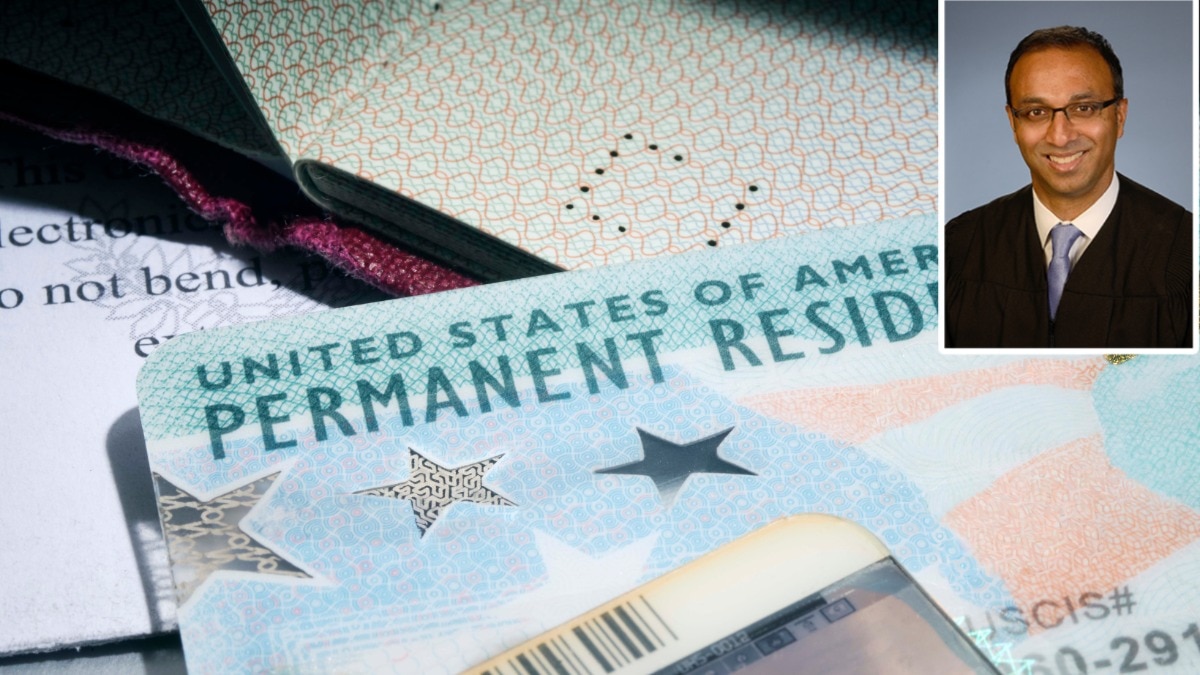
Supreme Court: Border Officers Need No Heightened Proof to Treat Returning Green Card Holders with Criminal Issues as Seeking Admission
Murthy Law Firm
murthy.comSummary
In a decision with real consequences for lawful permanent residents (LPRs) who travel internationally, the U.S. Supreme Court ruled on 23.Jun.2026, that a border officer does not need clear and convincing evidence that a green card holder committed a crime before treating that person as an applicant for admission. Kennedy International Airport, the CBP (border protection agency) officer did not treat him as already admitted. Lau later pleaded guilty, and the government placed him in removal proceedings on inadmissibility grounds. The Supreme Court reversed course on that point. It determines which removal track applies, and the two tracks are very different. As a practical matter at the airport, a resident reclassified in this way may be paroled into the country, issued temporary evidence of status in place of the physical green card, detained, or referred to immigration court. For green card holders, the key cautions are these. Green card holders with any criminal history are strongly encouraged to seek individualized legal advice before international travel. Readers should consult a qualified immigration attorney regarding their specific circumstances.
From the source
In a decision with real consequences for lawful permanent residents (LPRs) who travel internationally, the U.S. Supreme Court ruled on 23.Jun.2026, that a border officer does not need clear and convincing evidence that a green card holder committed a crime before treating that person as an applicant for admission. The 6-to-3 decision in Blanche v. Lau, No. 25-429 , makes it easier for the government to channel returning green card holders with criminal histories into the more difficult inadmissibility track, where they can be paroled into the country, detained, or placed in removal proceedings in which the burden of proof falls on the individual rather than on the government. Background As a general rule, an LPR returning from a trip abroad is treated as already admitted and is not regarded as “seeking an admission” to the United States. The law lists six narrow exceptions. One of them, subsection (C)(v), allows the government to treat a returning LPR as seeking admission if the person
Read the full article
Published by Murthy Law Firm on murthy.com