Judge denies the Justice Department's bid to stop processing California ballots
NPR – Politics
npr.org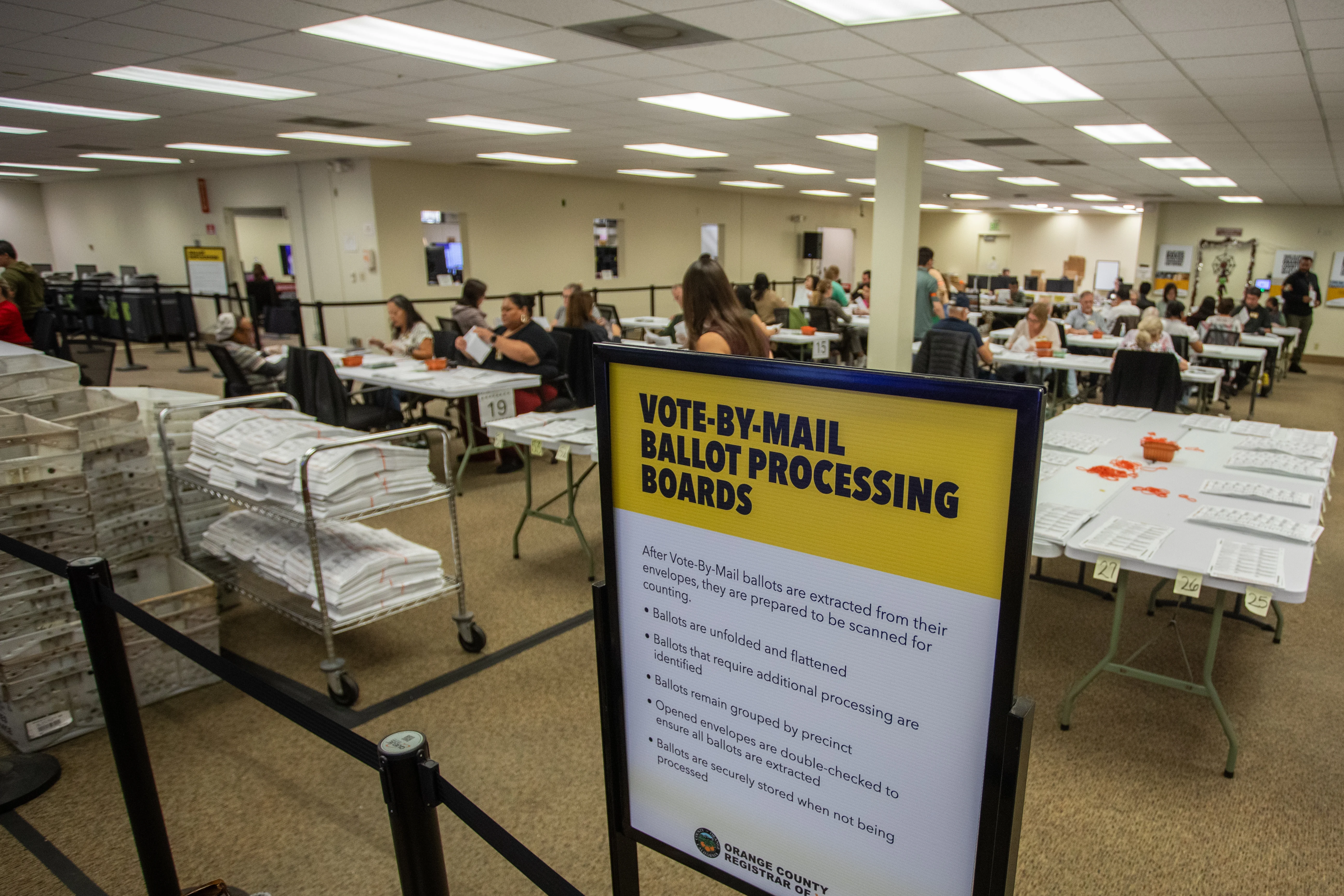
Summary
People extract ballots from their envelopes and prepare them to be scanned for counting in the Vote-By-Mail Processing Boards area at the Orange County Registrar of Voters Facility in Santa Ana, Calif., on Oct. 28. Apu Gomes/Getty Images hide caption A federal judge has denied an unprecedented, emergency request by the Department of Justice to segregate thousands of California ballots in the midterm elections. The Justice Department wants California election officials to stop processing ballots pertaining to 20,000 individuals that federal officials say are "likely" noncitizens. State and local officials in California have countered that the DOJ's list of "likely" noncitizens is unreliable, with a preliminary analysis by Los Angeles County showing that many on the list do not have active voter registrations. The officials also claim that setting aside ballots just days before Election Day, when voting and processing mailed ballots are already underway, would be unlawful and infeasible and would disenfranchise eligible voters. And last week, the DOJ filed an unusual lawsuit in Alaska that seeks to stop the state from certifying the results in its Senate race if the Republican incumbent loses due to votes for a longshot candidate with a similar name who is accused of being a spoiler candidate. "The Court must not be drawn into this chilling degradation of democratic values and constitutional principles." The Department of Justice quickly filed a notice that it is appealing Carter's denial. Citizenship and Immigration Services senior official Nicolas Bartell contested that in recent court filings, writing that his office's review of those individuals found none were U.S.-born. Bartell did acknowledge the review found four of those people "might have a claim to U.S. citizenship." He also provided the court additional details about the federal government's methodology in creating the list in recent court filings. But University of Delaware political scientist Kassra Oskooi, who has been tapped as an expert witness by voting rights groups who are intervening in the case, responded in his own declaration to the court that he believes USCIS (U.S. immigration agency)'s matching protocol "is likely to be unreliable." Carter wrote in his order the federal government's protocol "raises significant concerns" and that he could not conclude its process is credible.
From the source
While the judge rejected the Department of Justice's unprecedented demand in California, the case isn't over yet. The federal government immediately filed notice that it will appeal. (Image credit: Apu Gomes)
Read the full article
Published by NPR – Politics on npr.org