ℹ️ Informational only. This site aggregates public news and does not provide legal or immigration advice. Always verify with USCIS.gov or travel.state.gov. Full disclaimer →

StatusWire
← Back to feed
General U.S. NewsNov 4, 2026·3 min read

‘Seismic’ blue wave triggers the sinking of oil prices, energy stocks, and the chances of power permitting reform

F

Fortune – Tech

fortune.com
1h ago
‘Seismic’ blue wave triggers the sinking of oil prices, energy stocks, and the chances of power permitting reform

Summary

Most energy stocks plunged on Wednesday—except for clean power and utilities in a few remaining reliably red states—as crude oil prices fell to one-month lows because of bullishness on Iran war peace talks and bearishness on the data center boom after Democratic blue wave wins in the midterm elections. Even as Wall Street celebrated the anticipated gridlock from a splintered Congress and White House—the Dow Jones Industrial Average rose 3% Wednesday—most energy companies moved in the opposite direction, especially in states such as Texas that had the most shocking Democratic wins. The other potential loser is the bipartisan legislation to expedite the construction of energy projects—and power the AI boom—that would benefit both renewable power and oil and gas pipelines. Anti-fossil fuel Democrats are now potentially motivated to take harder negotiating tactics. TD Cowen analysts slashed their projection for passing the Bipartisan American Affordability and Jobs Act (BAAJA) from 40% to 25% during the lame-duck session before the new Congress is sworn in. Charles Hua, executive director of the PowerLines nonprofit, said the “seismic” blue wave from Congress to governors’ elections to public service commissions was a referendum on spiking utility bills, gasoline costs, and the inflationary ripple effects throughout the economy. “You only get such seismicity in political results if something is fundamentally unsteady or unstable, and I think one of the big manifestations of that really has been energy costs,” Hua told Fortune. In addition to voter discontent over the Iran war and fuel prices, there were more than 40 local ballot measure on restricting or regulating data centers. There is no clear compromise yet, and Trump could easily get frustrated and OPT (work permit after graduation) for escalation between now and January, which is what Trump himself predicted before the election. “I think the Iran conflict gets more complicated for the U.S. The legislation would facilitate the growth of long-distance transmission lines, which most benefit renewable energy. The legislation’s Democratic sponsor, Sen.

From the source

Most energy stocks plunged on Wednesday—except for clean power and utilities in a few remaining reliably red states—as crude oil prices fell to one-month lows because of bullishness on Iran war peace talks and bearishness on the data center boom after Democratic blue wave wins in the midterm elections. Even as Wall Street celebrated the anticipated gridlock from a splintered Congress and White House—the Dow Jones Industrial Average rose 3% Wednesday—most energy companies moved in the opposite direction, especially in states such as Texas that had the most shocking Democratic wins. The other potential loser is the bipartisan legislation to expedite the construction of energy projects—and power the AI boom—that would benefit both renewable power and oil and gas pipelines. Anti-fossil fuel Democrats are now potentially motivated to take harder negotiating tactics. TD Cowen analysts slashed their projection for passing the Bipartisan American Affordability and Jobs Act (BAAJA) from 40% to

Read the full article

Published by Fortune – Tech on fortune.com

Open on fortune.com ↗
Advertisement

More in General U.S. News

Schools must address bullying based on gender identity, sexual orientation: High Court
General U.S. News1h ago

Schools must address bullying based on gender identity, sexual orientation: High Court

Subscribed with another email? Logout and Login with that one. Account subscription benefits alongside Premium Stories, Editorials, Opinions and more. Unlock these with Subscription Published - November 05, 2026 03:33 am IST - GURUGRAM Punjab and Haryana High Court said the facts of the present case showed that “guidelines which remain on paper offer little protection to a child in distress”. | Photo Credit: PTI The Punjab and Haryana High Court has directed the Department of School Education, Haryana, and the Central Board of Secondary Education to ensure that all schools situated within the territorial jurisdiction of the court comply with the guidelines laid down by the Supreme Court in Sukdeb Saha’s case and that the mechanism and internal committee in every school cover complaints of bullying and harassment on the basis of gender, gender identity and sexual orientation. The court gave directions after hearing a petition by the mother of a 16-year-old boy, a student of a prominent school in Faridabad, who died on February 24, 2022, accusing the school authorities and the headmistress of it. Also, his artistic inclination was misunderstood by his peers as being effeminate, and he was bullied and physically and sexually assaulted by a group of students within the school premises, as per the petition. In her petition, the teenager’s mother had demanded laying down of guidelines for sensitisation of the authorities and the educational institutions to prevent harassment of students belonging to the LGBTQIA+ community and ensuring execution of such guidelines in the schools and colleges across the country, besides seeking a Central Bureau of Investigation probe into the case. Saying that the prayer for framing fresh guidelines cannot be accepted, the court observed that the Supreme Court in Sukdeb Saha’s case had taken note of the growing crisis of student deaths in the country and, in view of the binding guidelines of the apex court holding the field, no useful purpose would be served by this court laying down a separate set of guidelines on the same subject. However, the court said the facts of the present case showed that “guidelines which remain on paper offer little protection to a child in distress”. “The CBSE circular of the year 2015 was in force throughout the period during which the deceased child is alleged to have suffered. As per the record, the school was informed about his condition by his mother and his treating psychologist,” said the court, saying that the “real issue, therefore, is the effective implementation of the existing guidelines at the level of the schools.” The court directed the Haryana School Education Department to ensure that complaints of bullying and harassment are “dealt with promptly and confidentially, and that the cases in which a cognisable offence is disclosed are reported to the police as required by law.” The order said the CBSE must ensure that the annual reports required to be submitted to it as per the Supreme Court guidelines are called for and duly scrutinised, and that appropriate action is taken in accordance with its bye-laws in case of non-compliance.

Where voters stand on state ballot measures, from abortion to LGBTQ rights to guns
General U.S. News1h ago

Where voters stand on state ballot measures, from abortion to LGBTQ rights to guns

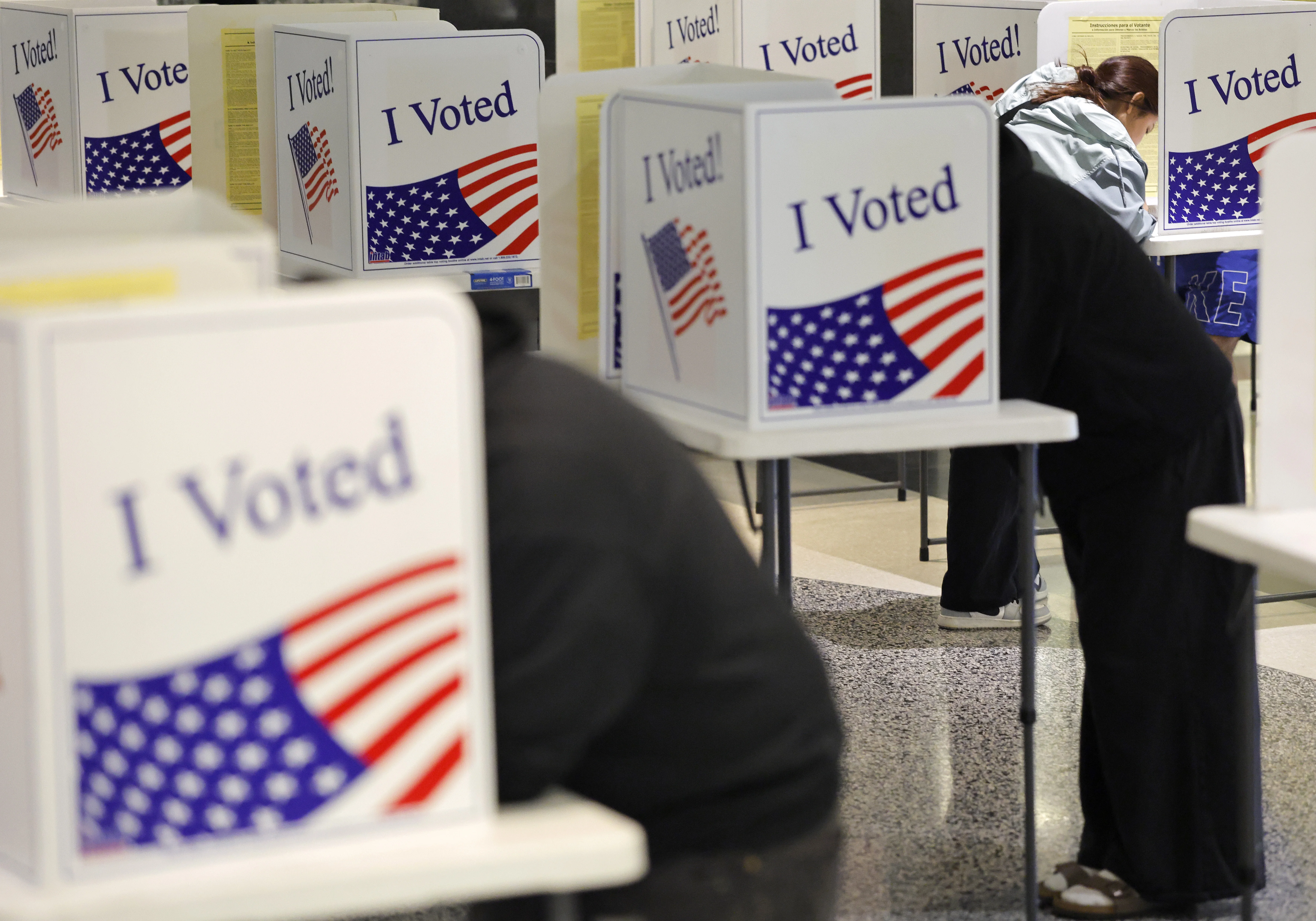
Voters weighed in on 146 statewide ballot measures across dozens of states. Mario Tama/Getty Images hide caption Tuesday's midterm elections were a huge sweep for Democrats, among other takeaways . And across 39 states — plus Washington, D.C. and the Northern Mariana Islands — voters weighed in on 146 statewide ballot measures spanning issues from taxes to transgender rights to traffic cameras to data centers and AI. Three states moved to preserve abortion access The U.S. Supreme Court overturned Roe v. Wade in 2022, leaving the legality and regulation of abortion up to each state. In subsequent elections, over a dozen states have put access to abortion on their ballots — and overwhelmingly moved to secure it. This year, four states considered abortion measures. Several states — including Alaska, Arkansas, Kansas, South Dakota and West Virginia — approved measures reinforcing that U.S. citizenship is required to vote in their elections. Virginia's ban has been moot since the Supreme Court made same-sex marriage legal nationwide in 2015, but this measure is seen as a safeguard in case Obergefell v.