Supreme Court seems split over federal agencies' ability to fine for law violations
NPR – Politics
npr.org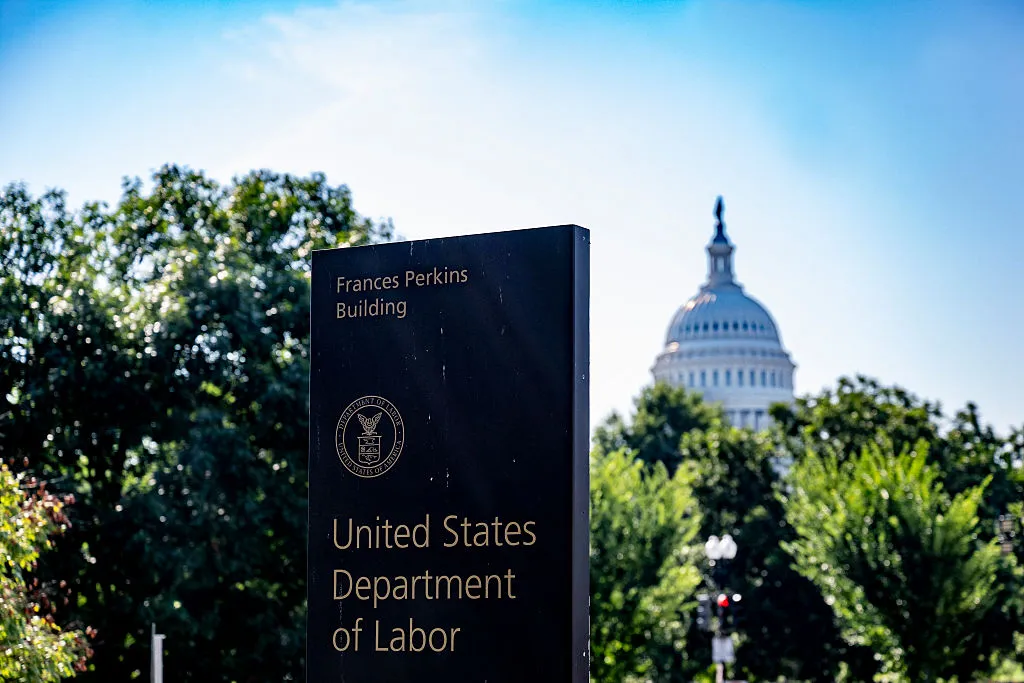
Summary
The U.S. Capitol is seen behind signage for U.S. Department of Labor in Washington, D.C., in August 2025. Jim Watson/AFP via Getty Images hide caption At the Supreme Court, the justices seemed divided on Tuesday in a case that could undermine the ability of many federal regulatory agencies to fine businesses that violate federal laws. For decades, farmers have relied on a federal immigration program that allows them to temporarily employ migrant workers to pick crops. The whole system is essentially policed by the Department of Labor to ensure that foreign workers don't undercut domestic laborers. Sun Valley is disputing the charges and contends that the Department of Labor imposing monetary fines based on its administrative proceedings is unconstitutional. Addressing Deputy Solicitor General Sarah Harris, who represented the Labor Department, Roberts said, "It seems to me you're just trying to leverage … the broad authority [of the executive branch] beyond the justification for its application." Justice Sonia Sotomayor asked how disruptive it would be for the federal courts to enforce the law instead of the designated agency (in this case the Department of Labor). To that Justice Ketanji Brown Jackson replied, "It seems like you're just sort of fighting the reality of … what Congress was trying to do … in ensuring that we don't have farm workers coming in and undercutting domestic workers." A more skeptical observation came from Justice Brett Kavanaugh: "What you're proposing is really at war with clarity," he said, adding, "I think that's not great systematically going forward." Justice Samuel Alito pointedly added, "What you're outlining is sort of a hodge-podge opinion, and maybe sometimes courts write that sort of thing," to which Justice Kagan quickly chimed in with a chuckling crowd in the court, "Not ever us!" In rebuttal, Deputy Solicitor General Harris was unusually candid. She later added, "A lot of other statutory regimes also would be on the cutting-room floor." And if that's the case, she said, the administration will have to go to Congress.
From the source
The Supreme Court heard arguments Tuesday in a case related to temporary worker visas. The company involved says enforcement issues should go through the courts, not the federal agency alone. (Image credit: Jim Watson)
Read the full article
Published by NPR – Politics on npr.org