
Chaos of border crossing gives way to limbo for Moroccans on Ceuta’s streets
The Guardian – World
theguardian.com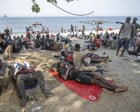
Summary
People among the more than 50,000 who entered Spanish enclave this week describe the journey and their prospects F our days ago, Youssef El Abbas saw an opportunity to reclaim the life he had lost seven years earlier. Here was a chance for the 44-year-old Moroccan father of four to return to Spain , from which he had been deported when his residency expired after the loss of his job in Bilbao in 2019. While en route, he saw Facebook posts and news reports claiming that the Moroccan authorities were allowing people to pass through their side of the border. That meant that unlike those who had crossed the previous night, he could simply travel overland before swimming for just five minutes across the border from Moroccan to Spanish territory to avoid the Spanish border controls. Nothing made sense.” Despite the crowds, El Abbas noticed the police were only letting Moroccans cross over. “All the sub-Saharan migrants were being pushed back by force.” He reached the border at 2.45pm on Wednesday. Madrid has attributed the latest influx to “human-trafficking mafias” that have taken advantage of a decision by Spain’s supreme court, which recently ruled that those intercepted at sea while trying to enter Ceuta or Melilla – the other Spanish enclave on the north African coast – could not be summarily returned under special rules. But there has also been speculation that the Moroccan authorities may have opened the border to signal their displeasure at Sánchez’s recent visit to Algeria, which supports efforts to free the disputed territory of Western Sahara from Moroccan occupation. In May 2021, Rabat loosened border controls – allowing 10,000 people to cross into Ceuta over the course of two days – during a diplomatic standoff triggered after Madrid allowed a Western Sahara independence leader to be treated for Covid-19 in Spain. He, too, had joined the Ceuta-bound crowds when he heard that the border was open. Fatima Hamed Hossain, a member of Ceuta’s assembly, fears that the strain created by the crisis has deepened divisions within the city. “Everything we’ve lived through has created tensions between neighbours,” she said. “That’s exactly what feeds the far right.” As a caravan of people returned back over the border, Said’s mind was on the future.
From the source
People among the more than 50,000 who entered Spanish enclave this week describe the journey and their prospects Four days ago, Youssef El Abbas saw an opportunity to reclaim the life he had lost seven years earlier. News was circulating that about 400 people had swum from Morocco to the neighbouring Spanish enclave of Ceuta on the north African coast, approximately 12 miles (19km) across the strait of Gibraltar from mainland Spain. Here was a chance for the 44-year-old Moroccan father of four to return to Spain, from which he had been deported when his residency expired after the loss of his job in Bilbao in 2019. Continue reading...
Read the full article
Published by The Guardian – World on theguardian.com

