The events at Ceuta show how Europe’s hard right now set the tone on immigration
The Guardian – World
theguardian.com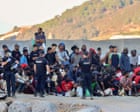
Summary
The narratives of the right are seeping into mainstream EU policy, and Spain finds itself increasingly isolated in its humanitarian stance on borders Don’t get This Is Europe delivered to your inbox? The exact circumstances in which the heavily securitised border came suddenly to be open are still unclear. Italy and Denmark jointly led the way there, accusing Madrid of failing to secure the EU’s only land border with Africa. Paul Taylor, a senior fellow with the European Policy Centre, says there was a shamelessly cynical interest for some EU leaders to pile on and isolate Madrid. In an EU where policy has been hardening since 2015, he bucks the trend on migration, too. “Spain has been an outlier, welcoming migration and actively working to integrate migrants into the economy and society,” Taylor said. “This is seen as an affront by many conservative politicians but also as a ‘pull factor’ encouraging would-be migrants to try their luck in Europe at a time when official EU policy is to combat irregular migration, crack down on abuses of the asylum system and park asylum seekers offshore in countries outside the bloc.” And this is exactly the bigger political bone Meloni, Frederiksen and others wanted to pick with Spain. In their letter to the EU, ostensibly about the immediate crisis in Ceuta, they targeted Madrid’s recent policy of allowing undocumented people working in mainland Spain to regularise their migration status , even though this was irrelevant for those involved in the Ceuta situation. One theory is that misleading posts circulated on Instagram, TikTok and Facebook following a 29 June Spanish supreme court ruling that clarified that under international law, the state cannot summarily deport migrants who arrive by sea without due process. The Ceuta episode could also lead to the acceleration of ICE (immigration enforcement agency)-style deportations from the EU. The Italian government in particular wants to see offshore migration centres, or “return hubs”, made possible under the EU’s new return regulation. Yet in a Europe devoid of safe and legal routes for asylum seekers, this is a direction that some of the most senior European legal experts have warned could create a “human rights black hole”.
From the source
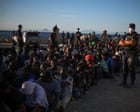
The narratives of the right are seeping into mainstream EU policy, and Spain finds itself increasingly isolated in its humanitarian stance on borders • Don’t get This Is Europe delivered to your inbox? Sign up here It was over almost as quickly as it began. But the human cost of the mayhem in Ceuta over the last seven days, and the disunity it exposed within the EU, will take a lot longer to fix. To recap: more than 70,000 people swam or waded into the tiny Spanish enclave in north Africa from neighbouring Morocco in a matter of hours at the end of last week. The exact circumstances in which the heavily securitised border came suddenly to be open are still unclear. Continue reading...
Read the full article
Published by The Guardian – World on theguardian.com