ℹ️ Informational only. This site aggregates public news and does not provide legal or immigration advice. Always verify with USCIS.gov or travel.state.gov. Full disclaimer →

StatusWire
← Back to feed
Layoffs & Tech JobsNov 2, 2026·3 min read

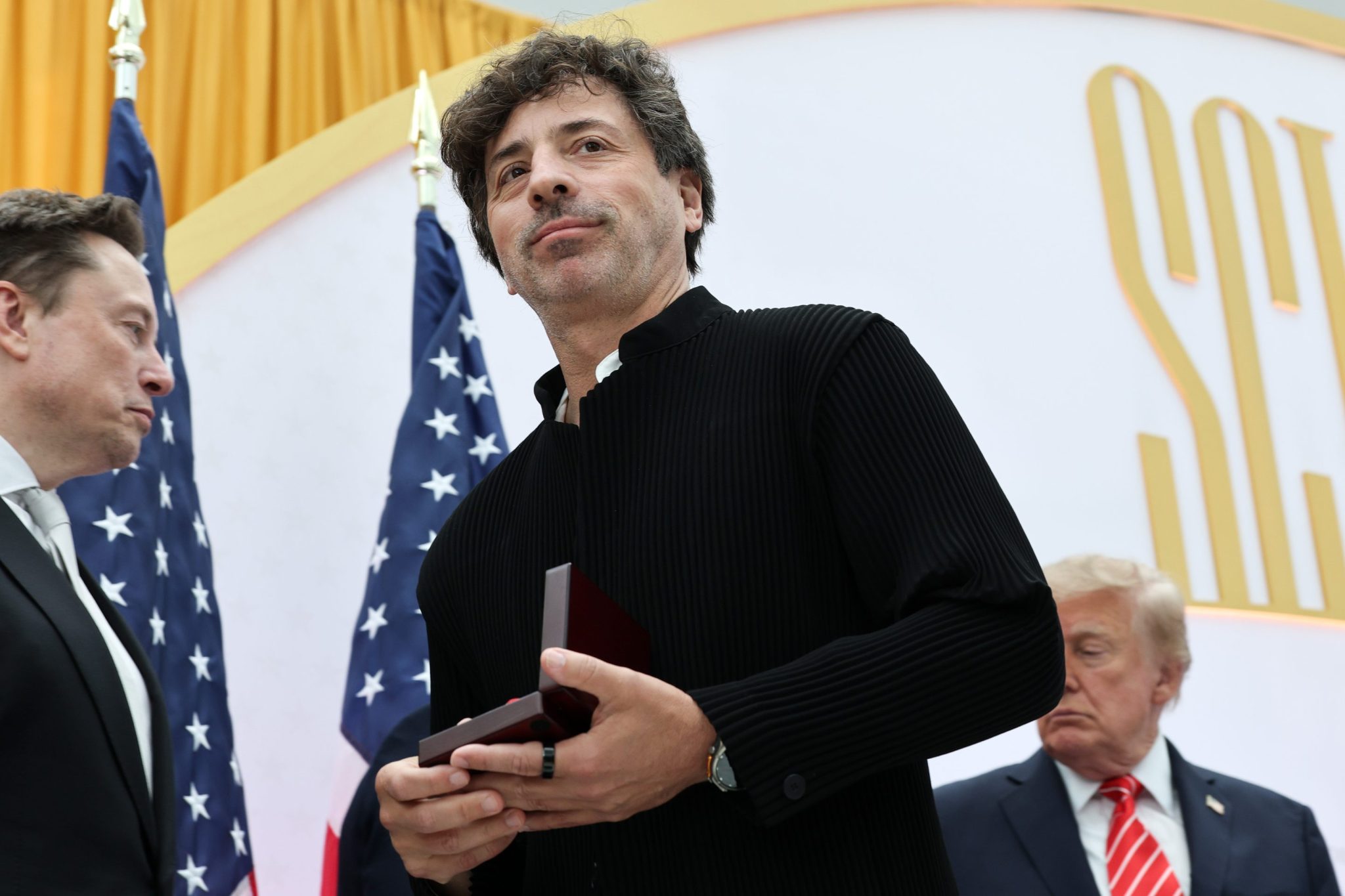
Billionaire Sergey Brin is building political infrastructure that will last beyond his $102 million fight against Prop 40

F

Fortune – Tech

fortune.com
2d ago
Billionaire Sergey Brin is building political infrastructure that will last beyond his $102 million fight against Prop 40

Summary

Google cofounder Sergey Brin spent much of his career on the sidelines of electoral politics. But a proposed California wealth tax has turned the billionaire into one of the state’s most powerful political financiers, prompting him to build an organization that can continue shaping state policy long after voters decide on the measure that initially mobilized him. Brin has contributed $102 million to Building a Better California, a political organization that has become the central vehicle for Silicon Valley billionaires seeking to influence California’s political direction. The group has raised hundreds of millions of dollars from wealthy tech executives, venture capitalists, and business leaders—channeling money into ballot measures that extend beyond the immediate fight against Proposition 40 . Through Oct. 20, Building a Better California has spent more than $304 million supporting efforts to defeat Proposition 40 and advance Propositions 41 and 42—direct counters to the wealth tax. Of that amount, approximately $118.5 million went toward opposing Proposition 40, while the other $186 million supported Propositions 41 and 42, according to Capital & Main . Proposition 41 would bar the state from exempting new taxes from its spending limit and require state audits of programs funded by new special taxes, making it harder for the state to use funds raised by the billionaire tax. Proposition 42 would outlaw retroactive taxation, directly countering Proposition 40. Building a Better California also endorsed Propositions 1, 3, 37, 41, and 42, according to its policy platform. In an interview with the New York Times in April, he compared the proposal to the socialism he experienced growing up in the Soviet Union—saying he did not want California to end up in the same place.

From the source

Google cofounder Sergey Brin spent much of his career on the sidelines of electoral politics. But a proposed California wealth tax has turned the billionaire into one of the state’s most powerful political financiers, prompting him to build an organization that can continue shaping state policy long after voters decide on the measure that initially mobilized him. Brin has contributed $102 million to Building a Better California, a political organization that has become the central vehicle for Silicon Valley billionaires seeking to influence California’s political direction. The group has raised hundreds of millions of dollars from wealthy tech executives, venture capitalists, and business leaders—channeling money into ballot measures that extend beyond the immediate fight against Proposition 40 . Two measures written to kill the tax Through Oct. 20, Building a Better California has spent more than $304 million supporting efforts to defeat Proposition 40 and advance Propositions 41 and

Read the full article

Published by Fortune – Tech on fortune.com
Open on fortune.com ↗
Advertisement
🗞️ Full Coverage· 2 sources on this story

Assembled automatically from 2 independent reports — every line below is a real sentence from a real source, not generated text. Numbers link to where each point came from.

20, Building a Better California has spent more than $304 million supporting efforts to defeat Proposition 40 and advance Propositions 41 and 42—direct counters to the wealth tax.[1]

But a proposed California wealth tax has turned the billionaire into one of the state’s most powerful political financiers, prompting him to build an organization that can continue shaping state policy long after voters decide on the measure that initially mobilized him.[2]

The morning after the midterms, there's still no answer on California's billionaire wealth tax — and the final results may not be in for days or even weeks.[3]

Rural California has an unusual bedfellow in wealthy Silicon Valley.[4]

Business Insider – Tech10h ago

Rural California has an unusual bedfellow in wealthy Silicon Valley.

Fortune – Tech(this article)2d ago

20, Building a Better California has spent more than $304 million supporting efforts to defeat Proposition 40 and advance Propositions 41 and 42—direct counters to the wealth tax.

More in Layoffs & Tech Jobs

After the midterms, Big Tech’s AI data center problem is only getting bigger
Layoffs & Tech Jobs5h ago

After the midterms, Big Tech’s AI data center problem is only getting bigger

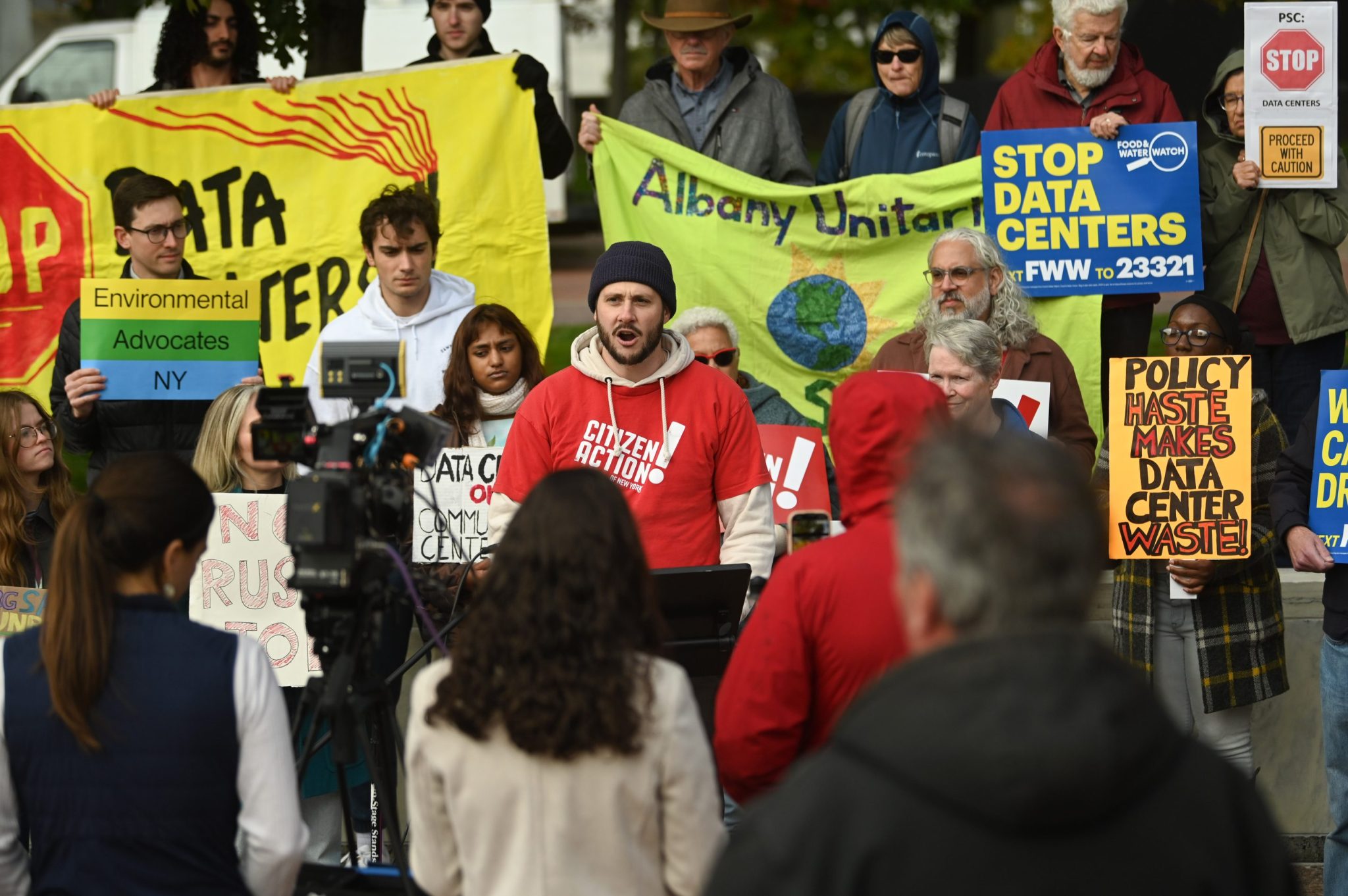
After ChatGPT launched in late 2022, tech companies raced to open data centers at unprecedented rates, pouring billions of dollars into AI hubs in states like Texas and Ohio. Amazon , Microsoft , Oracle , and others did so even as polling showed the centers were highly unpopular among a large swath of the U.S. population. On Tuesday, the issue came to a decisive tipping point. U.S. voters delivered an overwhelming victory for Democratic candidates throughout the country that will upend the halls of power in Washington and data center hotbeds like Texas. While tech companies have established years-long plans to keep opening the centers, and are regularly plugging more online, they will be met with new state and national political leaders whose mandate is to slow down the unpopular facilities. They also now face a wave of voter rejection on numerous projects across the U.S. Voters sided against data center development in all but one of 38 local ballot contests with complete counts tracked by Redbud Consulting, a Washington, D.C., polling and data science firm, according to preliminary results. That includes Piqua, a 20,000-person city in west central Ohio, where Meta is planning to spend $1 billion to construct a data center with a capacity of up to 1.4 gigawatts. Elon Musk, whose SpaceX expects $35 billion to $40 billion in capital expenditures in the quarter ending in December, wrote on X Tuesday night that “Data centers in space looking pretty appealing right now.” Musk spent more than $200 million supporting Republican Senate candidate Ken Paxton, who lost. Many analysts and tech industry experts agree on one thing: Even with restrictions, AI centers are here to stay, especially as hyperscalers say they need more computing capacity online, not less.

Big Tech claims voters’ AI backlash is “anti-Trump” not “anti-tech”
Layoffs & Tech Jobs5h ago

Big Tech claims voters’ AI backlash is “anti-Trump” not “anti-tech”

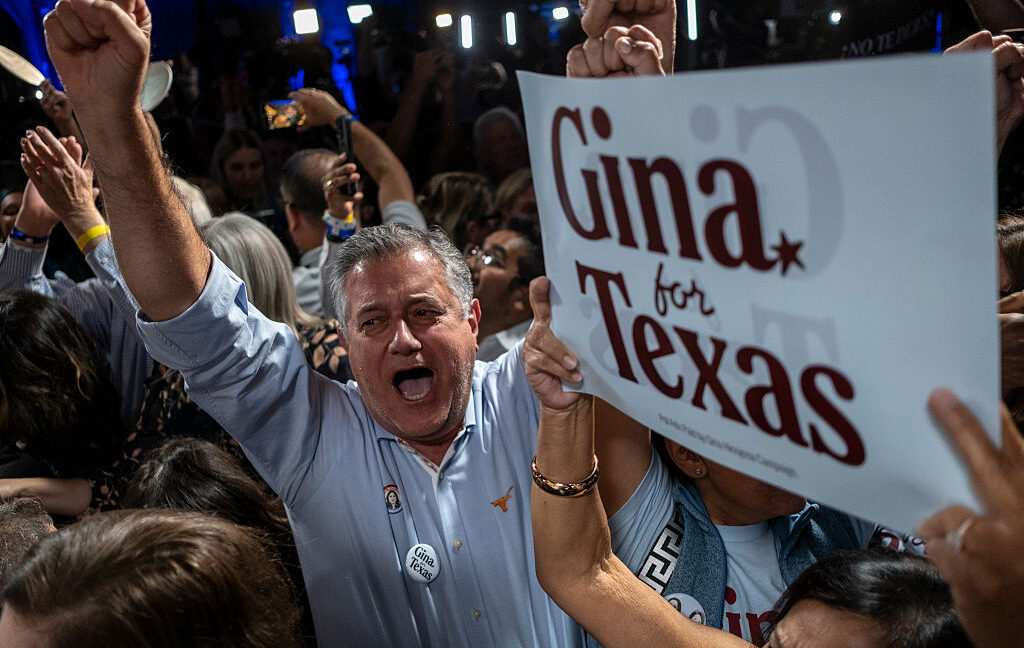
Donald Trump’s big, rapid American AI buildout now faces a major slowdown as voters in yesterday’s elections overwhelmingly supported candidates and measures that favored increasing restrictions on AI and data centers nationwide. One resource from a polling firm, called Redbud Consulting, tracked data center initiatives on the ballot and reported that out of 44 measures across 10 states seeking to restrict data centers, 38 passed so far. Those measures included dozens of moratoriums and bans. Analysts suggested those won’t impact data centers already under construction or approved through 2027, instead largely impacting future projects planned for 2028. Some projects may leave the state entirely, perhaps moving to Louisiana or Georgia—or perhaps going nowhere. “She would impose a moratorium until legislation is passed that gives communities a voice, protects household utility bills, and ends the tax incentives for data centers,” Johnson’s note said. “The question now is how long the pause lasts.” As PIMCO head of public policy Libby Cantrill similarly warned, “even if statewide moratoria do not result, we expect to see a lot more sand in the gears of the AI buildout regardless—with more time required to secure permits and other approvals, as well as more concessions that data center developers will have to make.” Texas wasn’t the only big shake-up. In a statement, Adam Kovacevich—a former Google executive and the CEO of a tech industry trade group and policy coalition called Chamber of Progress—suggested “the results offer little evidence of a voter mandate to crack down on AI or data centers.” He emphasized that “Democratic gubernatorial candidates who opposed data center bans won at a higher rate than those who supported them,” and admonished, “Let’s not confuse an anti-Trump wave with an anti-tech mandate.” “Voters wanted change on the economy, not a crackdown on innovation,” Kovacevich said, while sharing a resource for those in the tech industry seeking an alternative spin on the results. Additionally, more than half of voters said that “AI and data centers were a crucial or major factor in their vote for Congress.” The mass backlash is not just about utility costs or other data center fears, Montoya-Boyer suggested, but instead stemmed from a call from voters to regulate AI. Other analysts told Axios that voters appeared to be “more concerned about efforts to block state AI regulation than they are about data center controversies,” with one noting that across four swing districts, “voters trust Democrats over Republicans to hold AI executives accountable by a margin of 7 to 10 points.” Brad Carson, co-founder of Americans for Responsible Innovation, told Axios that “voters just sent a clear message that they want rules for AI and data centers.” “What we just witnessed was an AI earthquake,” Carson said. However, a Democrat-controlled Congress will likely “introduce new constraints on US computing capacity,” and that could give China a leg up, Ng suggested. “This would keep [US] AI token prices high, giving China an opportunity to export cost-effective inference services, supported by abundant electricity supplies,” Ng said. Michael Strobaek, global chief investment officer at Swiss private bank Lombard Odier, noted that Trump still has the power to veto any federal laws that Congress may advance.

How a blue wave crushed the tech right
Layoffs & Tech Jobs5h ago

How a blue wave crushed the tech right

Kent NISHIMURA / AFP via Getty Images; Rebecca Zisser/BI Elon Musk spent $446 million on the midterm elections. He ended up one of the biggest losers. Democrats tapped into voter fury over data centers encroaching on their neighborhoods. Markets are confident in Big Tech stocks, but CEOs may now have to face Congressional subpoenas. Trump's presidential term doesn't end for another two years. But the political sea change against tech titans like Elon Musk starts now. For Musk, the $446 million he spent to elect Republicans in the midterms wasn't much. It amounted to about a twentieth of a percent of his net worth. In the world of politics, it seemed like a tsunami. Shares of Musk's SpaceX and Tesla were down 5% and 2% in Wednesday trading, respectively, after Texas voters pushed out longtime Republican governor Greg Abbott and elected Democratic candidate James Talarico for the US Senate.